Case · My PMI · Research + UX
A redesign that turned a certification into a career engine
I led the research and design of My PMI, the member home for the world's top project-management credentials, and introduced a social credential badge. The work supported double-digit annual growth in PMP credential holders.
Results
A certification home that helped PMI's most valuable audience keep growing.
Average annual growth in PMP credential holders over the period the work supported.
Average annual growth in PMI membership over the same period.
A new shareable identity that opens career doors instead of sitting on file.
Member focus groups run with a business analyst ranked the redesign features by member value; Intuitive Company then ran an independent usability analysis.
A prioritized set of visual-design next steps drawn from Intuitive Company's member interviews.
Grounding the redesign in member focus groups, and treating a certification as something to show off rather than store, gave members a reason to stay engaged among the audience most invested in the brand.
The work
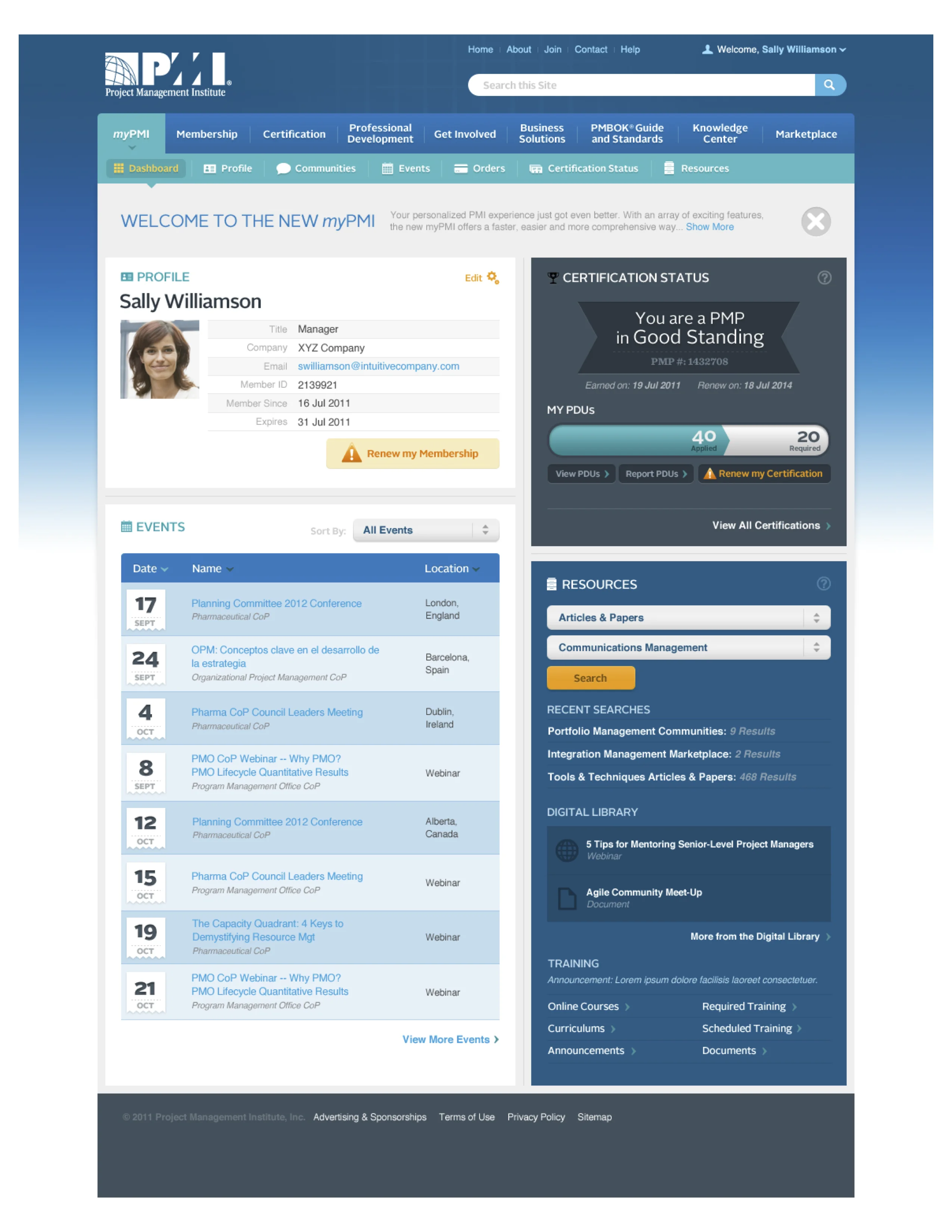
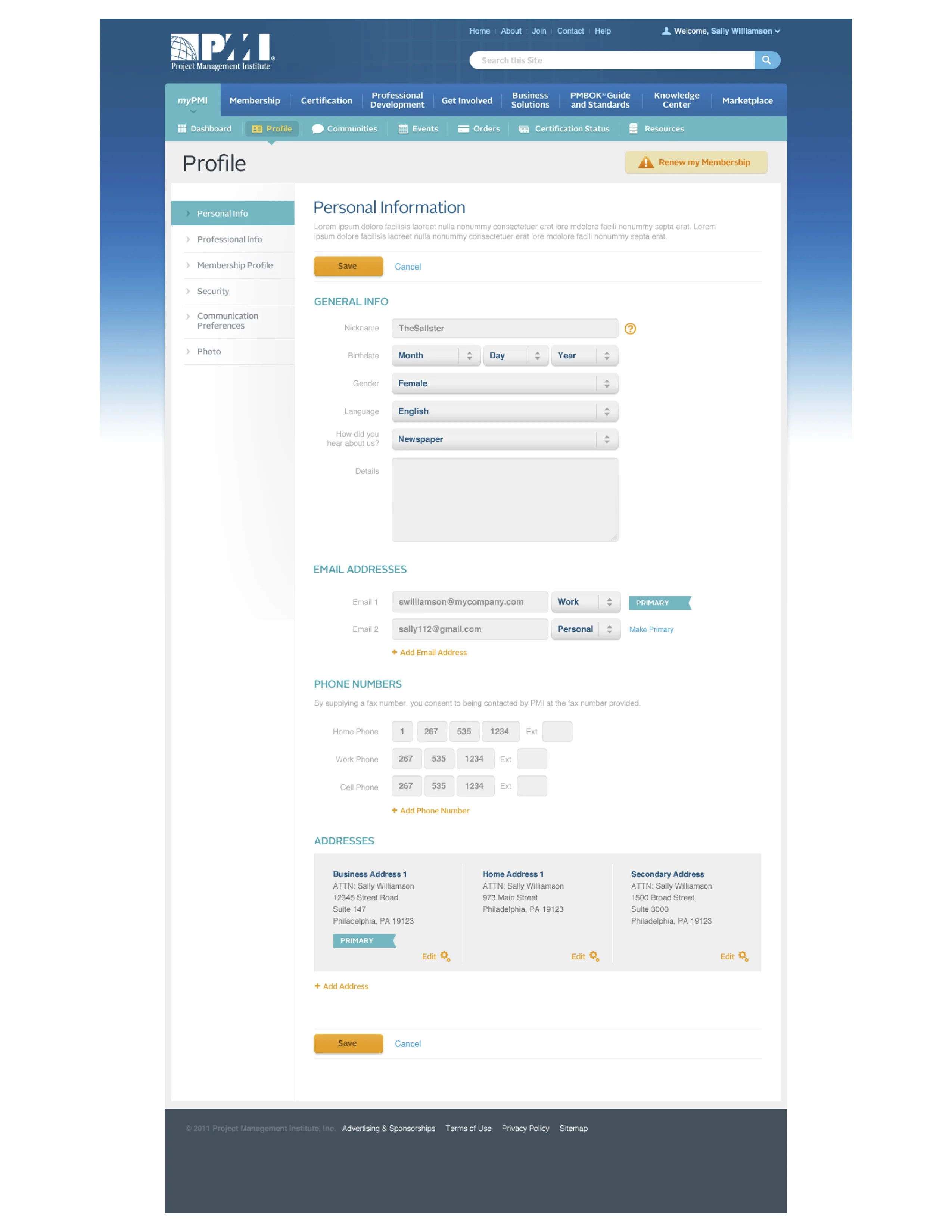
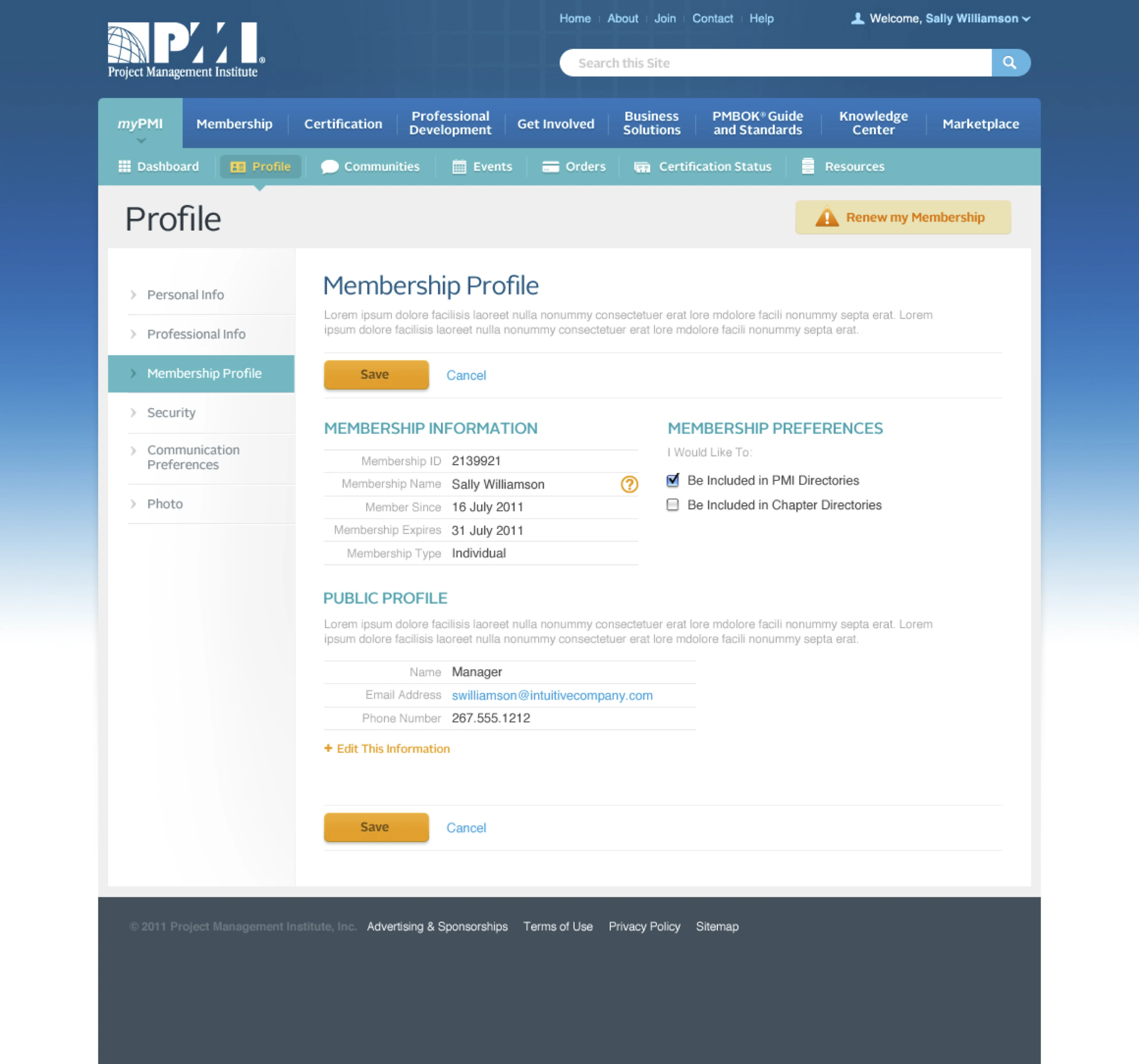
Certification status, PDU progress and a shareable credential, in one scannable home. My PMI is where millions of certified professionals manage their credentials after they earn them. The redesign pulls renewal, PDU tracking and a new social credential badge into a single member dashboard.
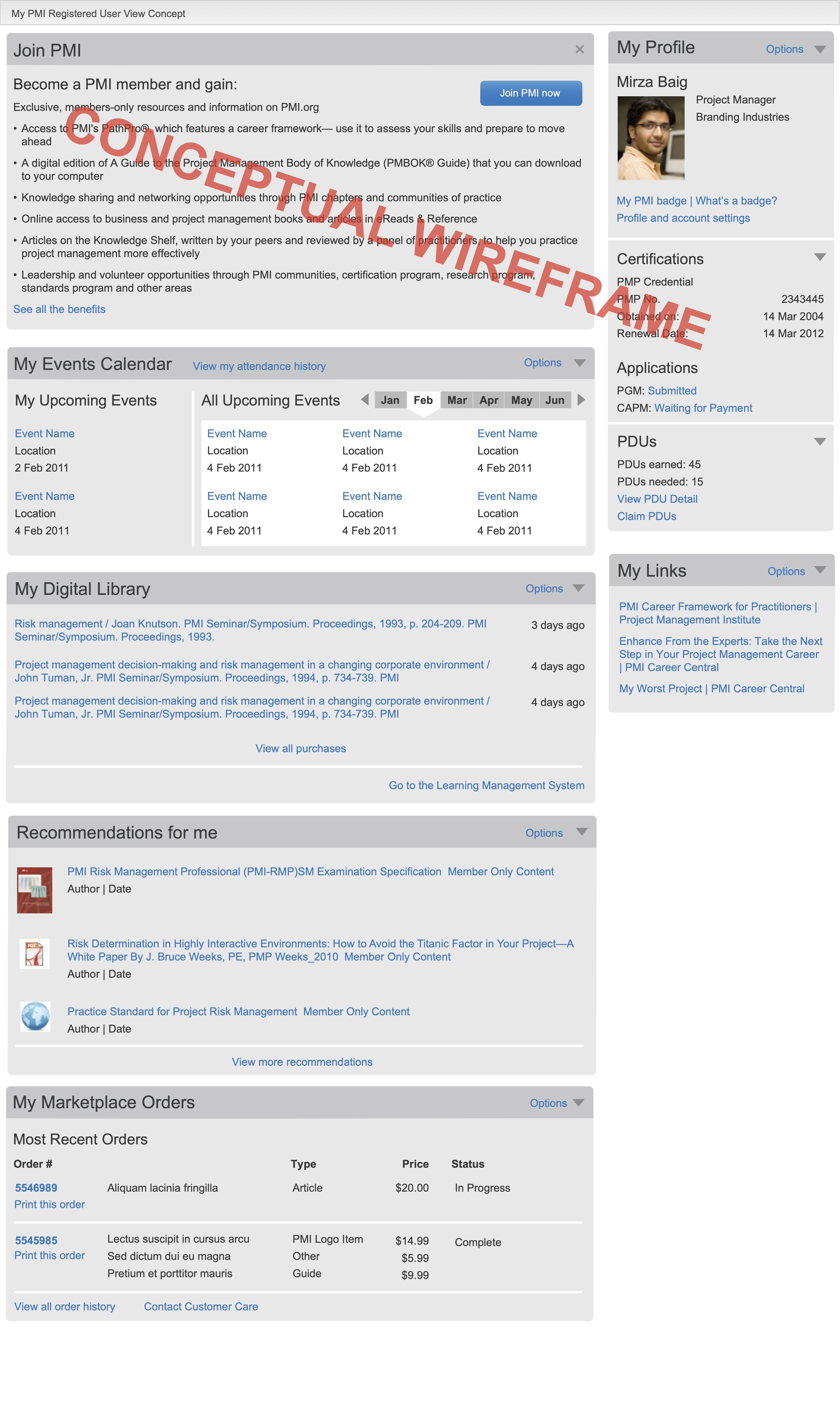
From sketch: the wireframes
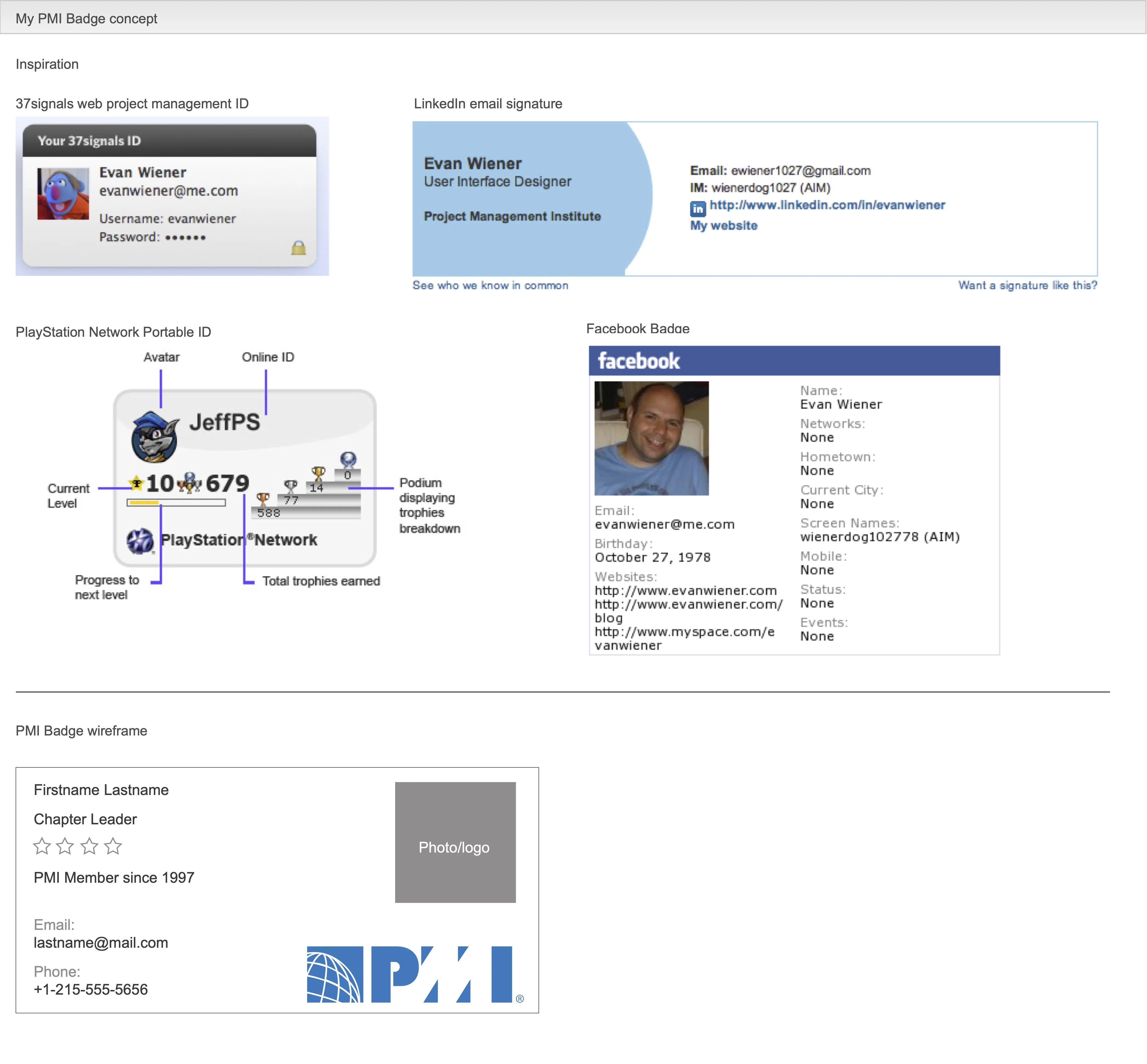
I proposed social-media profile integration: a credential badge that promotes a member's achievements the way a PlayStation Network card, a LinkedIn signature or a Facebook badge shows who you are. It follows the member onto the platforms where professional reputation is built. I worked the concept out in wireframes before committing any visual design.
From wireframe to a working mockup
Process
Research first, then design, then a feasibility check before launch.
PMI members earn a hard credential, then go quiet. My PMI was meant to be their home base, but it had grown into a dense grid of widgets with no evidence behind it: renewals and PDUs were scattered, the credential had no outward proof, and a long wish-list of features competed for space. I made the redesign evidence-led instead of opinion-led.
- Turned a wish-list into a testable feature setA sprawling list of dashboard ideas became discrete concepts members could react to, which is what made ranking possible at all.
- Co-ran member focus groups with a business analystFindings were captured rigorously and tied to business outcomes rather than preferences, and the features were sequenced by member value.
- Proposed the credential as a social identityA badge that promotes a member's achievements the way a PlayStation Network card, a LinkedIn signature or a Facebook badge does, following them onto the platforms where professional reputation is built.
- Worked the concept out in wireframes firstThe registered-user dashboard, the member view and the badge were resolved in structure before any visual design was committed.
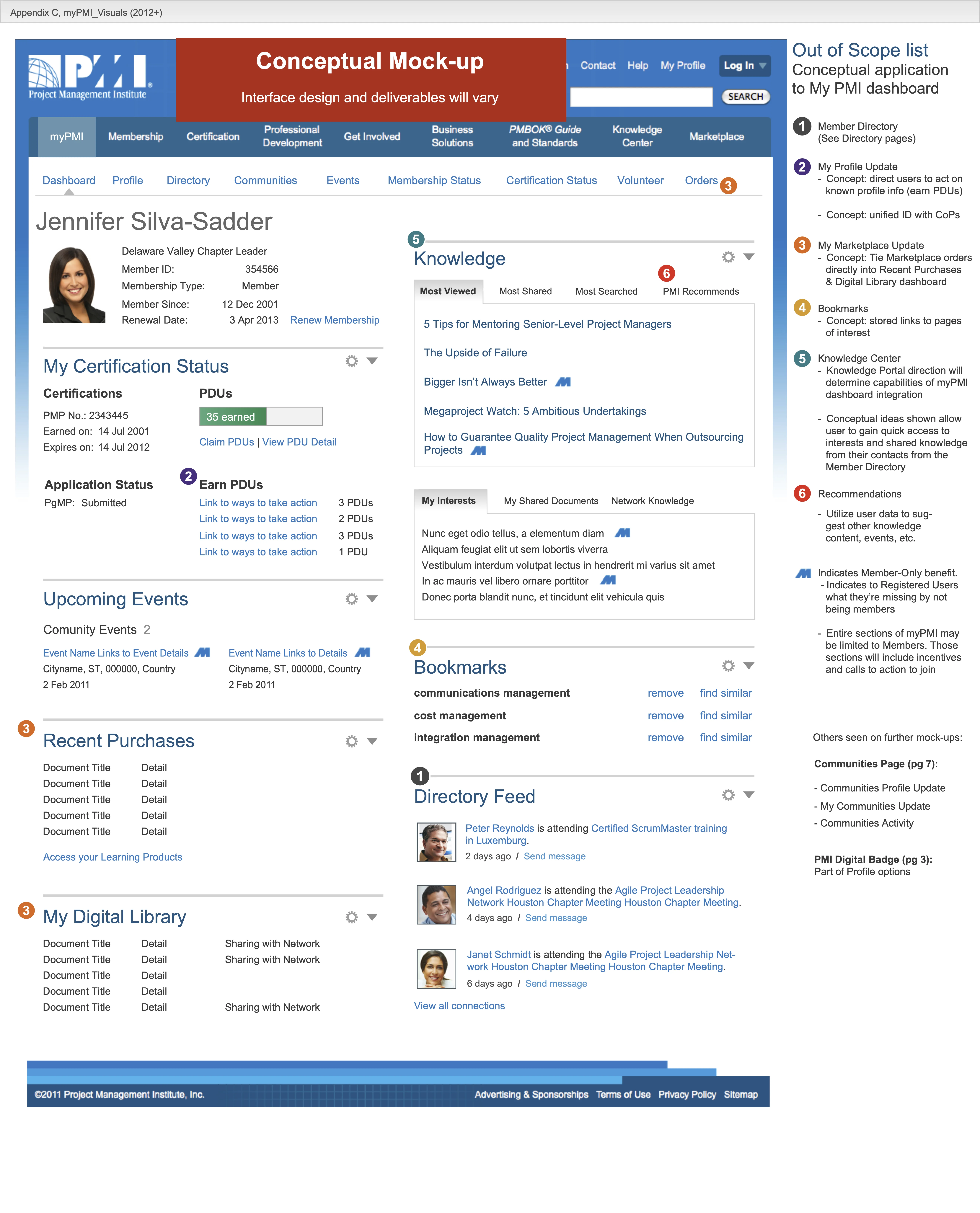
- Bridged wireframe to shipped design with a working mockupThe badge concept applied to the full dashboard, which is where renewal, PDU tracking and the credential were pulled into one scannable home.
- Protected the launch date with an independent checkIntuitive Company ran a usability analysis and delivered visual-design recommendations; their member interviews confirmed the direction and set a prioritized post-launch roadmap.
What if your certification could promote you, the way a game or social profile shows off everything you've earned? That was the bet behind My PMI's social credential badge.
Full detail
Situation and task
My PMI is the member home for the world's top project-management credentials. Members earn a hard credential, then go quiet. The page was meant to be their home base and had grown into a dense grid of widgets with no evidence behind it.
Three frictions defined the problem:
- Maintenance was scattered. Renewals, PDUs and standing lived across separate flows, so staying certified took more effort than it should.
- No outward proof. A hard-won credential stayed locked inside PMI.org with no easy way to broadcast it where careers are made.
- No priority signal. A long list of dashboard ideas competed for space with no evidence for what members actually valued.
The task was to lead the research and design of the member home, and to do it evidence-led rather than opinion-led, against a fixed launch date.
What I did, in full
A.Ran focus groups with a business analyst
Built a testable feature set. Turned a sprawling wish-list into discrete concepts members could react to.
Co-ran the focus groups. Partnered with a business analyst so findings were captured rigorously and tied to business outcomes rather than preferences.
Ranked by member value. Sequenced features by real impact, which is what surfaced the social credential badge as a standout.
B.Proposed a social credential identity
I proposed social-media profile integration: a credential badge that promotes a member's achievements the way a PlayStation Network card, a LinkedIn signature or a Facebook badge shows who you are. It follows the member onto the platforms where professional reputation is built.
I worked the concept out in wireframes before committing any visual design, across the registered-user dashboard, the member view, and the badge itself.
C.Took it from wireframe to a working mockup
I applied the concept to the full dashboard in a rough mockup, the bridge between the wireframes and the final screens. That is where renewal, PDU tracking and the badge were resolved into one scannable home rather than separate flows.
D.Ran a feasibility check against the launch date
To protect a fixed launch date, we brought in Intuitive Company to run an independent usability analysis and deliver visual-design recommendations. Their member interviews confirmed the direction, found what to refine, and set a prioritized post-launch roadmap.
Results, in full
Credential holders. Average annual growth of 16.9% in PMP credential holders over the period the work supported.
Membership. Average annual growth of 8.1% in PMI membership over the same period.
New capability. A social credential badge: a shareable identity that opens career doors instead of sitting on file.
Research rigor. Member focus groups run with a business analyst, then an independent usability analysis by Intuitive Company.
Roadmap. A clear set of visual-design next steps drawn from Intuitive Company's interviews.
Why it mattered. Grounding the redesign in member focus groups, and treating a certification as something to show off rather than store, gave members a reason to stay engaged among the audience most invested in the brand.